Computer Networks · M2 · read
Why the two maximum throughputs differ
ALOHA: access, collisions and throughput
Unit 3 · confirmed M2 starting point
A small offered load leaves many opportunities unused. A very large load creates many collisions. The best point balances those effects.
Pure ALOHA
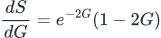 LaTeX:
\frac{dS}{dG}=e^{-2G}(1-2G)- The exponential is positive. For the slope to be zero, 1−2G must be zero.
- 1−2G=0 gives G=0.5.
- Substitute: S=0.5e⁻¹=1/(2e)≈0.18394. The slope is positive before G=0.5 and negative after it.
Slotted ALOHA
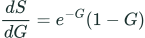 LaTeX:
\frac{dS}{dG}=e^{-G}(1-G)- Set 1−G=0, giving G=1.
- Substitute: S=e⁻¹=1/e≈0.367879.
- The slope changes from positive to negative, so this is the maximum.
Yaad rakho: Pure optimum: G half, maximum half of 1/e. Slotted optimum: G one, maximum 1/e.