Deep Learning · MT2 · section
F25 Q4a
F25 selected MT2 practice
Question
Question (10 marks). For N = 1,000 samples and batch size 100, count weight updates per epoch for batch GD, SGD and mini-batch GD. For J(θ) = 0.5 θ², η = 0.1, momentum 0.9, v₀ = 0, θ₀ = 1, compute two momentum iterations. List the required momentum-training hyperparameters.
Answer — step by step
Given
N = 1,000; mini-batch size = 100.
J(θ) = 0.5θ²; θ₀ = 1; v₀ = 0; η = 0.1; β = 0.9.
Use signed velocity.
To find
Count updates per epoch for batch, stochastic and mini-batch GD; then perform two momentum iterations.
Formula — which one and why
Number of updates. An update occurs after one processed batch. Full-batch GD uses one batch per epoch; SGD uses one sample per batch. Mini-batches need a stated remainder policy.
N = dataset size; B = batch size; E = number of epochs. Ceiling rounds upward to include a smaller final batch; floor drops it.
 LaTeX:
U_{\mathrm{batch}}=E LaTeX:
U_{\mathrm{SGD}}=EN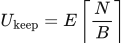 LaTeX:
U_{\mathrm{keep}}=E\left\lceil\frac NB\right\rceil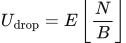 LaTeX:
U_{\mathrm{drop}}=E\left\lfloor\frac NB\right\rfloorYaad rakhne ka cue: Kitne batches process hue, utne updates hue.
Momentum with signed velocity. Combine the retained old displacement with the current downhill correction, then add that signed displacement to the old parameter.
v = signed velocity/displacement; β = momentum coefficient; g = current gradient; η = learning rate. This convention uses +v in the parameter update.
 LaTeX:
v_t=\beta v_{t-1}-\eta g_t LaTeX:
\theta_t=\theta_{t-1}+v_tYaad rakhne ka cue: Pehle velocity banao; phir old parameter mein velocity jodo.
Solution — step by step
Step 1: count full-batch updates.
All 1,000 samples contribute to one update: 1 per epoch.
Step 2: count stochastic updates.
One update per sample: 1,000 per epoch.
Step 3: count mini-batches.
 LaTeX:
1000/100=10Use signed velocity vₜ = βvₜ₋₁−ηgₜ and θₜ = θₜ₋₁+vₜ; g(θ) = θ.
Momentum iteration 1
Step 1: evaluate the gradient at the current parameter.
 LaTeX:
g_1=1Step 2: retain the previous displacement.
 LaTeX:
0.9(0)=0Step 3: scale the current gradient.
 LaTeX:
0.1(1)=0.1Step 4: combine to obtain the new signed velocity.
 LaTeX:
v_1=0-0.1=-0.1Step 5: add new velocity to the actual old parameter.
 LaTeX:
\theta_1=1+(-0.1)=0.9Momentum iteration 2
Step 1: evaluate the gradient at the current parameter.
 LaTeX:
g_2=0.9Step 2: retain the previous displacement.
 LaTeX:
0.9(-0.1)=-0.09Step 3: scale the current gradient.
 LaTeX:
0.1(0.9)=0.09Step 4: combine to obtain the new signed velocity.
 LaTeX:
v_2=-0.09-0.09=-0.18Step 5: add new velocity to the actual old parameter.
 LaTeX:
\theta_2=0.9+(-0.18)=0.72Hyperparameters: the basic momentum update has two main tunable coefficients, learning rate η and momentum β. A full training run also requires choices such as epochs and batch size (one for literal SGD), and may include a learning-rate schedule. There is no universal single count for all training configurations; state what is counted. Initial θ and v are initialization values, not learned outputs of the first update.