Deep Learning · MT2 · section
R24 Q1d
R24 selected MT2 practice
Question
Question (5 marks). For feature map Matrix 1 shown below, find max and average pooling with 2 × 2 windows, stride 2.
Answer — step by step
Given
For feature map Matrix 1 shown below, find max and average pooling with 2 × 2 windows, stride 2.
To find
Find the requested pooled output(s).
Formula — which one and why
Pooling. Max pooling selects the largest window entry. Average pooling adds its entries and divides by their count. Each channel is pooled separately.
V = current pooling window; n = number of entries in that window. Pooling learns no weights or biases.
 LaTeX:
y_{\max}=\max V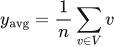 LaTeX:
y_{\mathrm{avg}}=\frac1n\sum_{v\in V}vYaad rakhne ka cue: Max mein biggest; average mein total ÷ window ka count.
Solution — step by step
Shape: 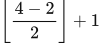 LaTeX:
\left\lfloor\frac{4-2}{2}\right\rfloor+1 = 2 on each axis; channels stay unchanged.
Pooling window (1,1)
Step 1: select the entries.
[21, 11, 12, 9]
Step 2: add all selected entries.
21 + 11 + 12 + 9 = 53
Step 3: divide by the 4 entries in this window.
53/4 = 13.25. Maximum = 21
Pooling window (1,2)
Step 1: select the entries.
[15, 10, 10, 11]
Step 2: add all selected entries.
15 + 10 + 10 + 11 = 46
Step 3: divide by the 4 entries in this window.
46/4 = 11.5. Maximum = 15
Pooling window (2,1)
Step 1: select the entries.
[11, 13, 7, 4]
Step 2: add all selected entries.
11 + 13 + 7 + 4 = 35
Step 3: divide by the 4 entries in this window.
35/4 = 8.75. Maximum = 13
Pooling window (2,2)
Step 1: select the entries.
[18, 12, 15, 12]
Step 2: add all selected entries.
18 + 12 + 15 + 12 = 57
Step 3: divide by the 4 entries in this window.
57/4 = 14.25. Maximum = 18
Average output: 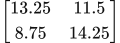 LaTeX:
\begin{bmatrix}13.25 & 11.5\\8.75 & 14.25\end{bmatrix}. Max output:  LaTeX:
\begin{bmatrix}21 & 15\\13 & 18\end{bmatrix}. Pooling normally has zero trainable parameters and reduces spatial dimensions.