Deep Learning · MT2 · section
F22 Q6a
F22 selected MT2 practice
Question
Question (10 marks). A CNN image classifier performs poorly because of vanishing gradients. Explain remedies.
Answer — step by step
A residual block learns a residual mapping F(x) and adds the input through a shortcut: y = F(x)+x, followed by an activation when the block design specifies one. A plain block without the shortcut outputs F(x). If F(x) becomes zero, the residual block can still pass x forward.
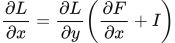 LaTeX:
\frac{\partial L}{\partial x}=\frac{\partial L}{\partial y}\left(\frac{\partial F}{\partial x}+I\right)The identity term gives a direct gradient path. This helps optimize very deep networks and reduces the burden of learning an identity mapping through many nonlinear layers. Features can be reused or refined instead of being completely reconstructed by every block. Residual connections address optimization degradation and can help gradient flow, although they do not guarantee that vanishing gradients can never occur anywhere in the network.
Elementwise addition requires compatible shapes. If channel counts or spatial sizes differ, use a suitable projection shortcut, often a 1 × 1 convolution with the required stride. A shortcut is an addition, not channel concatenation. Example: x = [2,−1] and F(x) = [0.5,0.2] give y = [2.5,−0.8]; a subsequent ReLU gives [2.5,0]. Without the shortcut the preactivation output would be [0.5,0.2].
Also inspect saturated sigmoid/tanh hidden units, initialization and gradient magnitudes. Appropriate ReLU-family activations and initialization can help preserve usable gradients. Residual blocks require shape-compatible additions or projections. Verify that the diagnosis is correct; additional training time alone cannot repair gradients that are consistently negligible.