Deep Learning · MT2 · section
Batch stochastic and mini batch gradient descent
Optimization algorithms
Definition. Batch, stochastic and mini-batch gradient descent differ in the subset of training examples used to estimate the gradient for each parameter update. Their update equation is the same; their gradient estimates and update frequency differ.
Explanation and working
All three use the same update idea. They differ in how much data contributes to one gradient.
| Method | Data for one update | Updates in one epoch with N samples | Typical behaviour |
|---|---|---|---|
| Batch GD | All N samples | 1 | Stable full-data gradient; costly updates |
| Stochastic GD | One sample | N | Frequent noisy updates |
| Mini-batch GD | B samples | Ceiling of N/B if final partial batch is retained | Efficient parallel calculation with moderate noise |
Question. N = 1,000 and B = 100. Find updates per epoch.
Given
N = 1,000 examples; mini-batch size B = 100; one epoch.
To find
Count full-batch, stochastic and mini-batch updates per epoch.
Formula — which one and why
Number of updates. An update occurs after one processed batch. Full-batch GD uses one batch per epoch; SGD uses one sample per batch. Mini-batches need a stated remainder policy.
N = dataset size; B = batch size; E = number of epochs. Ceiling rounds upward to include a smaller final batch; floor drops it.
 LaTeX:
U_{\mathrm{batch}}=E LaTeX:
U_{\mathrm{SGD}}=EN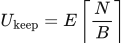 LaTeX:
U_{\mathrm{keep}}=E\left\lceil\frac NB\right\rceil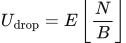 LaTeX:
U_{\mathrm{drop}}=E\left\lfloor\frac NB\right\rfloorYaad rakhne ka cue: Kitne batches process hue, utne updates hue.
Solution — step by step
Step 1: count full-batch updates.
All 1,000 samples form one group, so one epoch has 1 update.
Step 2: count stochastic updates.
One sample per update gives 1,000 updates per epoch.
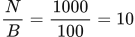
Step 3: count mini-batches.
 LaTeX:
\frac{N}{B}=\frac{1000}{100}=10Final answer: batch = 1; SGD = 1,000; mini-batch = 10 updates per epoch.
Mini-batch calculation with a remainder
Question. A dataset contains 105 samples and the mini-batch size is 20. Keeping the incomplete last batch, find the updates per epoch.
Given
N = 105; B = 20; retain the final incomplete batch.
To find
The number of updates per epoch.
Formula — which one and why
Every processed group causes one update. A remaining nonempty group also counts.
The ceiling symbol rounds upward to the next integer.
 LaTeX:
U=\lceil N/B\rceilYaad rakhne ka cue: Bacha hua batch process kiya toh ek aur update.
Solution — step by step
Step 1: count complete batches.
 LaTeX:
5(20)=100Step 2: count remaining examples.
 LaTeX:
105-100=5Step 3: include the nonempty last batch.
 LaTeX:
U=5+1=6Final answer: 6 updates. If a question explicitly drops the final incomplete batch, it instead gives 5.