Deep Learning · TEE · section
R25 Q2a · Activation, ReLU and numeric outputs
February 2025 re-exam · complete solved paper
Question
Question. Explain why activation functions are needed and sketch ReLU. Is sigmoid appropriate for an unscaled house-price output? Compute softmax([1.2,3.4,0.9]) and sigmoid(2.5). (10 marks)
Answer — step by step
An activation function transforms a neuron's weighted sum into its output. Nonlinear activations allow successive layers to represent nonlinear relationships. If every layer is only linear or affine, composing those layers still gives one affine transformation; depth alone does not create a nonlinear decision boundary.
Why two linear layers are still linear in the input
For the first layer let h = 2x + 1. Let the second output be y = 3h + 4. Substitute the first rule into the second:
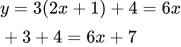 LaTeX:
y=3(2x+1)+4=6x+3+4=6x+7This is one straight-line rule. A nonlinear activation between the two calculations changes what the combined model can represent.
| Activation | Output range | Useful property | Main limitation |
|---|---|---|---|
| Sigmoid | Strictly between 0 and 1 | Useful as a binary-class probability output | Saturates at large positive or negative inputs; gradients become small |
| Tanh | Strictly between −1 and 1 | Can represent signed, zero-centered activations | Also saturates and can contribute to vanishing gradients |
| ReLU | From 0 upward | Simple; derivative is 1 for positive inputs | A unit that stays on the negative side receives zero local gradient |
Sigmoid and tanh do not return negative and positive versions of the same scale: their ranges differ. ReLU is not restricted to values below 1. For multiclass output, softmax normalizes a group of class scores so the probabilities sum to 1; it acts on the score vector rather than independently applying sigmoid to each score.
Exam conclusion: select the activation according to the layer's job and task. Hidden layers need useful nonlinear transformations; the output activation must match the meaning of the desired prediction.
 LaTeX:
\mathrm{ReLU}(z)=\max(0,z)Unscaled house prices are not restricted to(0,1), so a sigmoid cannot directly represent them. Use a linear regression output (or a justified positive-valued transform). A sigmoid could be used only with a deliberately bounded/normalized target and inverse transformation.
Given
Logits=[1.2,3.4,0.9]; separate sigmoid input=2.5.
To find
Normalized class probabilities and sigmoid value.
Formula: which one and why
 LaTeX:
p_i=\frac{e^{z_i-m}}{\sum_je^{z_j-m}},\quad m=\max_j z_j;\qquad\sigma(z)=\frac1{1+e^{-z}}Step 1. Subtract the maximum for stable softmax
[−2.2,0,−2.5]. This common shift leaves softmax unchanged.
Step 2. Exponentiate then sum
[0.11080315836233387, 1.0, 0.0820849986238988]; sum=1.192888156986.
Step 3. Divide each by the same sum
| Logit | Exponential / sum | Probability |
|---|---|---|
| 1.2 | 0.110803158362/1.192888156986 | 0.092886460 |
| 3.4 | 1.000000000000/1.192888156986 | 0.838301558 |
| 0.9 | 0.082084998624/1.192888156986 | 0.068811982 |
Step 4. Compute sigmoid separately
e^(−2.5)=0.082084998624;1+e^(−2.5)=1.082084998624; reciprocal=0.924141820.
Final answer
Softmax=[0.09288646, 0.838301558, 0.068811982], sum=1.000000000; sigmoid(2.5)=0.924141820.