Deep Learning · TEE · section
Faculty CNN table: shapes, activations and 62958 parameters
Convolutional neural networks
Question. A CNN receives a 32 × 32 × 3 image. It uses Conv1: eight 5 × 5 filters, stride 1, no padding; Pool1: 2 × 2, stride 2; Conv2: sixteen 5 × 5 filters, stride 1, no padding; Pool2: 2 × 2, stride 2; flatten; dense 120; dense 84; dense 10 followed by softmax. Include one bias per filter or receiving dense neuron. Find every output shape, activation count and trainable-parameter count. (Practice: 10 marks)
Given
Input = 32 × 32 × 3. Both convolutions are ordinary full-channel convolutions. Pooling has no padding. Dense widths are 120, 84 and 10. No batch-normalization layer is present in this particular question.
To find
Output shape and number of output values for each layer, its trainable parameters, and the total parameters.
Formula — which one and why
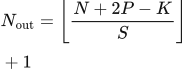
Use the spatial-size formula for each convolution/pool. Use one full-depth kernel plus one bias per convolutional filter. Flattening counts all remaining values before the first dense layer. Each dense neuron then receives one weight per input plus one bias.
 LaTeX:
N_{\mathrm{out}}=\left\lfloor\frac{N+2P-K}{S}\right\rfloor+1 LaTeX:
A=H_{\mathrm{out}}W_{\mathrm{out}}C_{\mathrm{out}}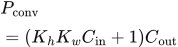 LaTeX:
P_{\mathrm{conv}}=(K_hK_wC_{\mathrm{in}}+1)C_{\mathrm{out}} LaTeX:
P_{\mathrm{dense}}=(n_{\mathrm{in}}+1)n_{\mathrm{out}}A counts produced activations. P_conv and P_dense count independent learned coefficients. They are not the same quantity. Pooling, flattening and softmax itself add zero learned parameters here.
Solution — step by step
Step 1: input. Shape = 32 × 32 × 3. Values = 32×32×3 = 3,072. Trainable parameters = 0.
Step 2: Conv1 spatial size. (32−5)/1 +1 = 28. Eight filters give shape 28 × 28 × 8. Activations = 28×28×8 = 6,272.
Step 3: Conv1 parameters. One filter contains 5×5×3 = 75 weights. Add one bias: 76. Multiply by eight filters: 76×8 = 608.
Step 4: Pool1. (28−2)/2 +1 = 14. Shape = 14 × 14 × 8. Activations = 14×14×8 = 1,568. Parameters = 0; channel count remains eight.
Step 5: Conv2 spatial size. (14−5)/1 +1 = 10. Sixteen filters give shape 10 × 10 × 16. Activations = 1,600.
Step 6: Conv2 parameters. Its input has eight channels. Each filter has 5×5×8 = 200 weights, then one bias. Total = 201×16 = 3,216.
Step 7: Pool2 and flatten. (10−2)/2 +1 = 5. Pool shape = 5 × 5 × 16. Flattened length = 5×5×16 = 400. Neither operation adds parameters.
Step 8: dense 120. Weights = 400×120 = 48,000. Biases = 120. Parameters = 48,120. Output contains 120 activations.
Step 9: dense 84. Weights = 120×84 = 10,080. Biases = 84. Parameters = 10,164. Output contains 84 activations.
Step 10: dense 10 and softmax. Weights = 84×10 = 840. Biases = 10. Dense parameters = 850. Softmax converts the ten logits into ten probabilities and adds zero parameters. A table naming the combined classifier row “Softmax” attributes these 850 parameters to its preceding dense transformation.
Step 11: add only the trainable counts. 608+3,216 = 3,824; +48,120 = 51,944; +10,164 = 62,108; +850 = 62,958.
| Layer | Output shape | Activations | Parameters |
|---|---|---|---|
| Input | 32 × 32 × 3 | 3,072 | 0 |
| Conv1 | 28 × 28 × 8 | 6,272 | 608 |
| Pool1 | 14 × 14 × 8 | 1,568 | 0 |
| Conv2 | 10 × 10 × 16 | 1,600 | 3,216 |
| Pool2 / flatten | 5 × 5 × 16 / 400 | 400 | 0 |
| Dense 120 | 120 | 120 | 48,120 |
| Dense 84 | 84 | 84 | 10,164 |
| Dense 10 → softmax | 10 | 10 | 850 + 0 |
Final answer: The network has 62,958 trainable parameters. This is the specified classroom CNN, not a universal parameter total for every LeNet-like network.
Yaad rakho: Shape aage carry karo; weights aur activations ko alag columns mein rakho.