Disaster Management · M2 · formulas
Lecture formulas and optional calculation reference
Definitions and formulas
Read the meaning, then use the worked examples
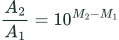
Magnitude difference
 LaTeX:
\frac{A_2}{A_1}=10^{M_2-M_1}Compares seismic-wave amplitudes on a comparable logarithmic scale; it is not the energy ratio.
Open the complete explanation and solved examples →
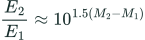
Approximate energy ratio
 LaTeX:
\frac{E_2}{E_1}\approx10^{1.5(M_2-M_1)}Uses the common approximate magnitude–energy relation.
Open the complete explanation and solved examples →
Seismic moment
 LaTeX:
M_0=\mu A DRigidity × rupture area × average slip. Use compatible SI units to obtain N·m.
Open the complete explanation and solved examples →
Moment magnitude, SI
 LaTeX:
M_w=\frac{2}{3}(\log_{10}M_0-9.1)Here the numerical value of M₀ is in N·m. Do not substitute dyne·cm into this version.
Open the complete explanation and solved examples →
Rational runoff method
 LaTeX:
Q=0.27778CIAQ in m³/s, rainfall intensity I in mm/h, catchment area A in km², dimensionless C. It estimates peak runoff under the method’s assumptions.
Open the complete explanation and solved examples →
Channel discharge
 LaTeX:
Q=A_c vFlow cross-section A_c in m² × mean velocity v in m/s gives Q in m³/s. A_c is not the catchment area above.
Open the complete explanation and solved examples →
Conversions used in the calculations
 LaTeX:
1\,\mathrm{km}=1000\,\mathrm m,\qquad1\,\mathrm{km^2}=10^6\,\mathrm{m^2} LaTeX:
1\,\mathrm{ha}=10^4\,\mathrm{m^2},\qquad1\,\mathrm h=3600\,\mathrm s LaTeX:
1\,\mathrm{N\,m}=10^7\,\mathrm{dyne\,cm}Yaad rakho: Pehle units match; phir formula; phir calculation. Same A symbol ka meaning har formula mein same nahi hota.