Disaster Management · TEE · papers
Q3A · Discuss in detail the causes and impacts of “Tamil Nadu Tsunami”. Also suggest any 4 …
2023-05-04 · Semester VI final
Actual older TEE paper · 100 marks · Q1 compulsory; any four of Q2–Q7
Q3A. Discuss in detail the causes and impacts of “Tamil Nadu Tsunami”. Also suggest any 4 measures of mitigation for reoccurrence of such disaster. [10 marks]
Answer
The Tamil Nadu tsunami of 26 December 2004 was part of the Indian Ocean tsunami generated by the Sumatra–Andaman earthquake. Nagapattinam was especially badly affected; other severely affected coastal districts included Cuddalore, Kanyakumari and Chennai.
1. Causes: how the waves reached Tamil Nadu
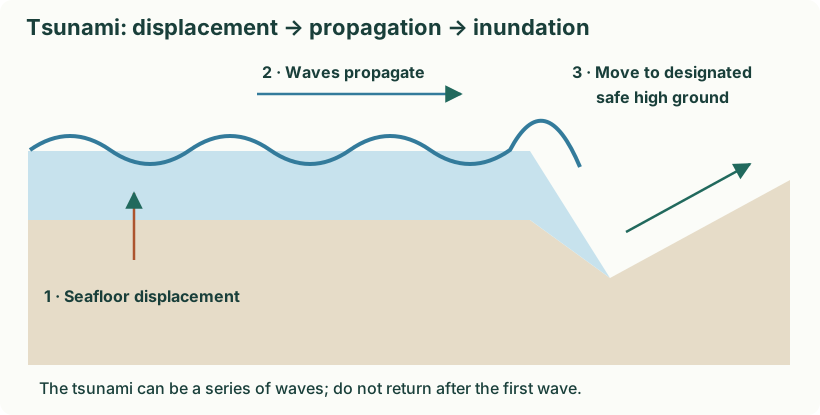
- Undersea earthquake. Sudden slip on the subduction boundary between the India plate and Burma microplate displaced the seafloor. The main trigger was this earthquake, not a cyclone or ordinary high tide.
- Displacement and propagation of seawater. Vertical seafloor movement displaced the water above it. Long waves carried that disturbance across the Indian Ocean towards exposed coasts, including Tamil Nadu.
- Coastal inundation and vulnerability. As the waves approached shallow coastal water, their interaction with coastal shape and depth produced destructive inundation and currents. Low-lying settlements, vulnerable housing and inadequate warning/evacuation readiness increased the losses; these conditions worsened the disaster but did not cause the earthquake.
2. Impacts in Tamil Nadu
- Loss of life and family disruption. Nagapattinam and other affected coastal districts suffered deaths, injuries and separation or loss of family members. Women, children and people unable to escape faced serious vulnerability.
- Housing loss and displacement. Waves damaged or destroyed coastal houses and belongings. Families needed temporary shelter, safe water, sanitation and later permanent housing.
- Fishing and connected livelihoods. Damaged boats, nets, landing and harbour facilities interrupted fishing. Fish sellers, processors and other workers dependent on the coastal fishing economy also lost income.
- Damage to services and productive assets. Roads, power and other community facilities were damaged, complicating relief and recovery. Loss of livestock and other household assets further weakened livelihoods.
Real recovery connection: Tamil Nadu’s tsunami rehabilitation programmes included housing and infrastructure reconstruction and livelihood support. This shows why recovery had to restore both physical assets and the means of earning a living.
3. Four measures to reduce losses in a future tsunami
- Monitoring linked to usable warnings. Connect seismic/ocean monitoring and official tsunami alerts to local announcements, accessible messages and named action responsibilities. An alert helps only if exposed people receive it and know where to go.
- Evacuation planning and repeated drills. Map inundation zones, mark routes to designated safe ground and practise assisted evacuation. Include fishers, visitors, children, older people and persons with disabilities; do not assume everyone can walk the same distance or understand one language.
- Safer coastal land use and shelter locations. Use hazard maps to guide new development and locate essential facilities outside high-risk areas. Where needed, properly engineered designated evacuation structures can complement safe routes; an ordinary coastal building is not automatically a safe refuge.
- Resilient reconstruction and protected lifelines. Rebuild houses and public facilities using risk-informed siting and suitable standards; provide backup water, communications and access. Restore fishing and other livelihoods without recreating the same avoidable exposure.
Meaning of “mitigation for reoccurrence”: these measures reduce deaths, damage and disruption when another tsunami occurs. They cannot prevent the tectonic earthquake or guarantee that no tsunami will recur.
Case facts: USGS: 2004 tsunami mechanism; NIDM: Tamil Nadu case study, pp. 43–48; Tamil Nadu rehabilitation programmes.