Intelligent Systems II · TEE · mocks
Q3(b) Fuzzy loan-approval system [10]
Final examination · 24 Nov 2025
100-mark timed practice using the actual Final 2025 paper. Q1 compulsory; any four of Q2–Q7. Worked solutions are below the questions.
A bank uses fuzzy decision support with Credit Score and Income Stability, both on 1–100. Loan Approval is a score on 1–100 with labels Reject, Consider and Approve. Define triangular membership functions, construct nine rules, explain Mamdani inference and defuzzify for Credit Score=55 and Income Stability=35. [10 marks]
Answer
Given
| Variable | Crisp value |
|---|---|
| Credit Score | 55 |
| Income Stability | 35 |
The question asks us to design the membership functions. This solution chooses Low=Tri(1,25,50), Medium=Tri(25,50,75), High=Tri(50,75,100) for both inputs. Output labels use the same triangles in their respective order. These are explicit design choices, not additional printed givens.
To find
A complete stated design and its continuous Mamdani centroid.
Formula and why it applies
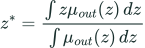
Use min for AND and implication, max for aggregation and the true area centroid of the resulting shape. A peak-only weighted average is a different defuzzifier.
 LaTeX:
z^*=\frac{\int z\mu_{out}(z)\,dz}{\int\mu_{out}(z)\,dz}Solution
Step 1. Specify the membership functions
| Input / output position | Triangle | Peak |
|---|---|---|
| Low / Reject | (1,25,50) | 25 |
| Medium / Consider | (25,50,75) | 50 |
| High / Approve | (50,75,100) | 75 |
Use 0 outside each triangle, the rising fraction before the peak and the falling fraction after it. This design is evaluated at the requested input; a deployed controller would also need coverage/fallback at all boundary values.
Step 2. Write all nine rules
| Credit Score / Income Stability | Low | Medium | High |
|---|---|---|---|
| Low | Reject | Reject | Consider |
| Medium | Reject | Consider | Approve |
| High | Consider | Approve | Approve |
Read each cell as an IF–AND–THEN rule. For example, the centre cell combines Medium with Medium.
Step 3. Fuzzify Credit Score = 55
 LaTeX:
\mu_{Low}(55)=0 LaTeX:
\mu_{Medium}(55)=\frac{75-55}{75-50}=0.8 LaTeX:
\mu_{High}(55)=\frac{55-50}{75-50}=0.2Step 4. Fuzzify Income Stability = 35
 LaTeX:
\mu_{Low}(35)=\frac{50-35}{50-25}=0.6 LaTeX:
\mu_{Medium}(35)=\frac{35-25}{50-25}=0.4 LaTeX:
\mu_{High}(35)=0Step 5. Evaluate all rules and aggregate matching consequents
| Credit Score | Income Stability | Firing strength | Consequent |
|---|---|---|---|
| Low | Low | min(0,0.6) = 0 | Reject |
| Low | Medium | min(0,0.4) = 0 | Reject |
| Low | High | min(0,0) = 0 | Consider |
| Medium | Low | min(0.8,0.6) = 0.6 | Reject |
| Medium | Medium | min(0.8,0.4) = 0.4 | Consider |
| Medium | High | min(0.8,0) = 0 | Approve |
| High | Low | min(0.2,0.6) = 0.2 | Consider |
| High | Medium | min(0.2,0.4) = 0.2 | Approve |
| High | High | min(0.2,0) = 0 | Approve |
Aggregated label strengths: Reject = 0.6, Consider = 0.4, Approve = 0.2.
 LaTeX:
\mu_{out}(z)=\max_r\min(\alpha_r,\mu_{C_r}(z))Step 6. Draw the aggregated output
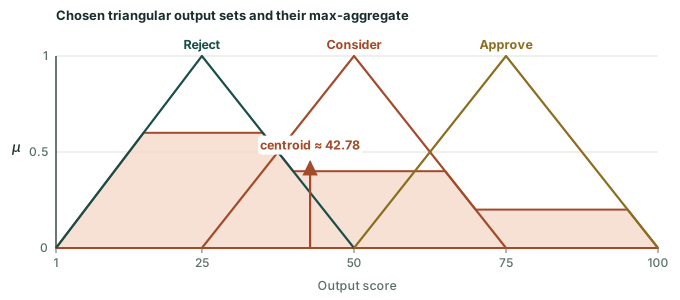
Step 7. Calculate area and moment of each straight-line strip
For a strip from a to b with endpoint heights u and v, its trapezoid area is A. Its first moment M is the integral of z times the line height.
 LaTeX:
A=(b-a)(u+v)/2 LaTeX:
M=\frac{b-a}{6}\big[(2a+b)u+(a+2b)v\big]| a | b | u | v | Area A | Moment M |
|---|---|---|---|---|---|
| 1 | 15.4 | 0 | 0.6 | 4.32 | 45.792 |
| 15.4 | 25 | 0.6 | 0.6 | 5.76 | 116.352 |
| 25 | 35 | 0.6 | 0.6 | 6 | 180 |
| 35 | 40 | 0.6 | 0.4 | 2.5 | 93.333333333 |
| 40 | 50 | 0.4 | 0.4 | 4 | 180 |
| 50 | 55 | 0.4 | 0.4 | 2 | 105 |
| 55 | 65 | 0.4 | 0.4 | 4 | 240 |
| 65 | 70 | 0.4 | 0.2 | 1.5 | 100.833333333 |
| 70 | 75 | 0.2 | 0.2 | 1 | 72.5 |
| 75 | 95 | 0.2 | 0.2 | 4 | 340 |
| 95 | 100 | 0.2 | 0 | 0.5 | 48.333333333 |
Step 8. Divide total moment by total area
 LaTeX:
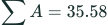
\sum A=35.58 LaTeX:
\sum M=1522.144 LaTeX:
z^*=\frac{1522.144}{35.58}\approx42.780888139Because the paper asks for a design, a different explicitly specified membership/rule system can yield a different numerical output. Explain the choices and use the chosen defuzzification method consistently; no particular examiner mark outcome is promised.
How the centroid table’s breakpoints are obtained
For each output triangle, solve “line height = clip height”. Reject is clipped at .6: rising endpoint 1+.6(25−1)=15.4 and falling endpoint 50−.6(50−25)=35. Consider is clipped at .4: endpoints 25+.4(50−25)=35 and 75−.4(75−50)=65. Approve is clipped at .2: endpoints 50+.2(75−50)=55 and 100−.2(100−75)=95.
Now take the maximum of the three clipped curves. The declining Reject edge reaches the Consider height .4 at (50−z)/25=.4, hence z=40. The declining Consider edge reaches the Approve height .2 at (75−z)/25=.2, hence z=70. These crossover locations must be included when splitting the aggregate. Original peaks and other clip endpoints may add extra splits without changing the total area.
For the first aggregate strip from a=1 to b=15.4, endpoint heights are u=0 and v=0.6. Find its area and first moment. [3 marks · Worked example]
Given
Strip endpoints a=1 and b=15.4; left height u=0 and right height v=0.6. This is a straight rising edge of the clipped Reject set.
To find
A and M for one table row.
Formula and why it applies
LaTeX: A=(b-a)(u+v)/2 LaTeX:
M=\frac{b-a}{6}[(2a+b)u+(a+2b)v]A is trapezoid area. M weights every small area by its horizontal position; this formula integrates a straight line.
Solution
Step 1. Width and height sum
 LaTeX:
b-a=15.4-1=14.4\qquad u+v=0.6Step 2. Area
 LaTeX:
A=14.4\times0.6/2=8.64/2=4.32Step 3. First bracket term
 LaTeX:
(2a+b)u=(2+15.4)\times0=0Step 4. Second bracket term
 LaTeX:
(a+2b)v=(1+30.8)\times0.6=31.8\times0.6=19.08Step 5. Moment
 LaTeX:
M=(14.4/6)(0+19.08)=2.4\times19.08=45.792Interpret the loan result using an explicit decision rule
Choose the output label having the greatest membership at the centroid; this is an additional stated interpretation rule. At z=42.780888139:
 LaTeX:
\mu_{Reject}=(50-z)/25\approx0.288764474,\quad\mu_{Consider}=(z-25)/25\approx0.711235526,\quad\mu_{Approve}=0The resulting recommendation is Consider / manual review; this design does not recommend automatic approval. If a binary approve/reject answer is required, the question must supply a threshold or you must state the threshold you adopt. A different decision threshold is separate from defuzzification.