Intelligent Systems II · TEE · papers
Q1(a) Joint masses, normalization and conditional probability [5]
Final / re-examination · 28 Apr 2025
Actual historical paper ·100 marks attempted /140 offered · Q1 compulsory + any four of Q2–Q7. Source defects and solution assumptions are explicitly identified.
| Machine | No Fault (X = 0) | Fault (X = 1) |
|---|---|---|
| Machine A | 0.40 | 0.05 |
| Machine B | 0.25 | 0.10 |
| Machine C | 0.20 | 0.08 |
| Machine D | 0.05 | 0.07 |
A factory uses four machines (Machine A, Machine B, Machine C, and Machine D) for production. The above table shows the joint probability distribution of a fault occurring (X) and the machine type (Y).
- If a fault occurs, what is the probability that it came from Machine C?
- What is the probability that a randomly selected product has a fault?
- Given the product is from Machine B, what is the probability that it has a fault?
Answer
Given
The eight printed entries are used exactly as shown. X=1 means fault; Y identifies the machine.
To find
P(C | fault), P(fault), and P(fault | B).
Formula and why
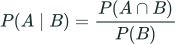 LaTeX:
P(A\mid B)=\frac{P(A\cap B)}{P(B)}Conditioning restricts the denominator to the given group. Before treating a whole table as a joint probability distribution, its entries must sum to 1.
Step 1. Check the printed total
 LaTeX:
\text{No-fault total}=0.40+0.25+0.20+0.05=0.90 LaTeX:
\text{Fault total}=0.05+0.10+0.08+0.07=0.30 LaTeX:
\text{Grand total}=0.90+0.30=1.20\ne1Source inconsistency: as printed, this is not a valid normalized probability table. Treating the entries as proportional nonnegative masses is one explicit repair; dividing every entry by 1.20 preserves conditional ratios.
Step 2. Machine C, given a fault
 LaTeX:
P(C\mid X=1)=\frac{0.08/1.20}{0.30/1.20}=\frac{0.08}{0.30}=\frac4{15}\approx0.266667Among all fault mass, 0.08 belongs to C. The common normalization factor cancels.
Step 3. Overall fault probability under the stated repair
 LaTeX:
P(X=1)=\frac{0.30}{1.20}=0.25Answer under mass normalization: 25%. The raw column sum 0.30 is only the unnormalized fault mass. If the examiner intended another corrected entry, the unconditional probability depends on that correction; 0.30 cannot be asserted as a valid probability while retaining all eight printed numbers.
Step 4. Fault, given Machine B
 LaTeX:
P(X=1\mid B)=\frac{0.10}{0.25+0.10}=\frac{0.10}{0.35}=\frac27\approx0.285714Machine B is the denominator because the product is known to come from B. Final conditional answers: 26.6667% and 28.5714%.