Natural Language Processing · TEE · formulas
Information retrieval
Application calculations
Formulas explained through full worked examples
Information retrieval (IR) locates and ranks items relevant to an information need, usually expressed as a query. The collection may contain documents, product descriptions or scientific papers. Retrieval estimates relevance; it does not itself establish that every retrieved claim is true.
The inverted index
An inverted index maps a term to the documents containing it, often with positions or counts. For D1 “cats drink milk” and D2 “dogs drink water”, the posting list for drink is {D1,D2}, while milk maps only to D1. This avoids rescanning every document for every query.
| Term | Posting list |
|---|---|
| cats | D1 |
| drink | D1, D2 |
| milk | D1 |
| dogs | D2 |
| water | D2 |
Matching and ranking
Boolean retrieval combines term membership using AND, OR and NOT. Vector-space retrieval represents documents and queries as weighted vectors, for example with TF-IDF, and compares them with cosine similarity. Learned retrieval can use dense embeddings for meaning-based matching. The representation used at query time must be compatible with the document index.
Search engines and recommendation
A search engine receives an explicit query and ranks matching indexed pages. A recommender may derive an implicit query from a user’s liked items or profile and retrieve similar candidates. Both require candidate retrieval and ranking, but the source of the information need differs.
Evaluate the results
For retrieval, TP is the number of retrieved relevant documents, FP retrieved irrelevant documents, and FN relevant documents not retrieved. Precision and recall use the same formulas as classification. Ranking measures also consider the positions of relevant items; a relevant result at rank 1 is more useful than one far below.
Retrieval evaluation
A search system retrieves 8 documents; 6 are relevant. There are 10 relevant documents in the collection. Find precision, recall and F1.
Retrieved=8; relevant retrieved=6; all relevant=10.
To findP, R and F1.
Formula and why it applies
 LaTeX:
P=\frac{\text{relevant retrieved}}{\text{retrieved}},\quad R=\frac{\text{relevant retrieved}}{\text{all relevant}}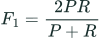 LaTeX:
F_1=\frac{2PR}{P+R}The denominator is 8 for precision and 10 for recall because they ask different questions.
Solution
Step 1. Identify the confusion counts
TP=6; FP=8−6=2; FN=10−6=4.
Step 2. Precision
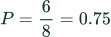 LaTeX:
P=\frac68=0.75Step 3. Recall
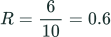 LaTeX:
R=\frac6{10}=0.6Step 4. F1
 LaTeX:
F_1=\frac{2(0.75)(0.6)}{0.75+0.6}=\frac{0.9}{1.35}=\frac23\approx0.666667Yaad rakho: Precision: jo laaye, unmein kitne sahi? Recall: jo sahi the, unmein kitne laaye?