Natural Language Processing · TEE · formulas
Adjusted counts and relative discounting
Smoothing & perplexity
Formulas explained through full worked examples
The slides also express smoothing through an adjusted count c*. Instead of writing the smoothed probability with denominator N+V, they rescale its numerator so the denominator can remain N. Algebraically these are equivalent:
 LaTeX:
c^*=(c+1)\frac{N}{N+V},\qquad P_L(w)=\frac{c^*}{N}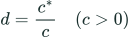 LaTeX:
d=\frac{c^*}{c}\quad(c>0)The relative discount d compares adjusted and original counts. It is undefined when c=0 because division by zero is undefined. Add-one smoothing moves the distribution toward uniformity: frequent events are reduced, but some rare seen events may increase. It is not correct to claim that every nonzero count must decrease under Laplace smoothing.
Question. For N=20 and V=5, a word has original count c=10. Find its adjusted count, smoothed probability and relative discount.
Given
N=20; V=5; c=10.
To find
c*, P_L and d.
Formula and why it applies
 LaTeX:
c^*=(c+1)N/(N+V),\quad P_L=c^*/N,\quad d=c^*/cThese expressions rewrite add-one smoothing without changing its probability.
Solution
Step 1. Form the new total
 LaTeX:
N+V=20+5=25Step 2. Find the adjusted count
 LaTeX:
c^*=(10+1)\frac{20}{25}=11(0.8)=8.8Step 3. Find the probability
 LaTeX:
P_L=8.8/20=0.44Step 4. Find the relative discount
 LaTeX:
d=8.8/10=0.88Question. Under N=20, V=5, a rare word occurs once. Compute its adjusted count and compare the original and smoothed probabilities.
Given
N=20; V=5; c=1.
To find
c*, original P and smoothed P_L.
Formula and why it applies
 LaTeX:
c^*=(c+1)N/(N+V)The same smoothing rule may increase a rare event's probability.
Solution
Step 1. Original probability
 LaTeX:
P=1/20=0.05Step 2. Adjusted count
 LaTeX:
c^*=(1+1)(20/25)=1.6Step 3. Smoothed probability
 LaTeX:
P_L=1.6/20=0.08Question. For N=20 and V=5, an in-vocabulary word has count zero. Find its adjusted count and smoothed probability. Can a relative discount be calculated?
Given
c=0; N=20; V=5.
To find
c*, P_L and whether d exists.
Formula and why it applies
 LaTeX:
c^*=(c+1)N/(N+V),\qquad P_L=c^*/NThe pseudo-count creates positive mass for the unseen vocabulary item.
Solution
Step 1. Adjusted count
 LaTeX:
c^*=(0+1)(20/25)=0.8Step 2. Smoothed probability
 LaTeX:
P_L=0.8/20=0.04Step 3. Relative discount
d would be 0.8/0. That is undefined, so do not report a finite discount.