Natural Language Processing · TEE · papers
Q7b · Co-occurrence, dot products and plot
2024-12-03 · final · recovered AI paper
Previous examination · complete worked answers
Answer
Target is the word whose row we represent. Context is an observed neighbouring word whose column we count. A window defines which tokens count as neighbours; here all other tokens in the same sentence. A co-occurrence matrix records those counts.
Given
The boy kicked the ball into the field. The dog barked at the boy. The sun was shining over the field. The boy ran after the dog. The ball rolled to the tree.
To find
Matrix, two dot products and the requested 2D coordinates.
Formula: which one and why
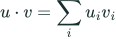 LaTeX:
u\cdot v=\sum_i u_iv_iUse lowercase token-pair counts within each sentence; do not cross sentence boundaries.
Step 1. List contributions and build the matrix
| Sentence | Target occurrences | Context occurrences |
|---|---|---|
| 1 | boy, ball | kicked, field |
| 2 | dog, boy | |
| 3 | sun | field |
| 4 | boy, dog | ran |
| 5 | ball | tree |
| Target / context | kicked | field | tree | ran |
|---|---|---|---|---|
| boy | 1 | 1 | 0 | 1 |
| ball | 1 | 1 | 1 | 0 |
| dog | 0 | 0 | 0 | 1 |
| sun | 0 | 1 | 0 | 0 |
Step 2. Dot boy and dog
[1, 1, 0, 1] · [0, 0, 0, 1] = 1×0 + 1×0 + 0×0 + 1×1 = 1
Step 3. Dot boy and sun
[1, 1, 0, 1] · [0, 1, 0, 0] = 1×0 + 1×1 + 0×0 + 1×0 = 1
Step 4. Plot coordinates: kicked on x, field on y
| Target | (x,y) |
|---|---|
| boy | (1, 1) |
| ball | (1, 1) |
| dog | (0, 0) |
| sun | (0, 1) |
Final answer
boy·dog=1; boy·sun=1. Both share one counted context contribution. Dot-product similarity reflects this corpus and magnitude, not a claim that boy is equally semantically related to dog and sun in general.