Advertising and Public Relations · TEE · practice
Find BDI and CDI from raw totals
Optional numerical practice
Extra drills; no claim that these exact questions or allocated marks appeared in TEE
Optional practice question. An area has 200,000 people out of a total population of 2,000,000. Brand sales are 30,000 units in the area and 200,000 units in all areas. Category sales are 120,000 units in the area and 600,000 units in all areas. Calculate BDI and CDI. [3 practice marks]
Answer
Authored illustration: these numbers were chosen to explain a faculty-note concept. No matching supplied-data question was found in the 14 recovered APR papers. Standalone calculation drills are optional practice; their marks are author-set.
Given
| Quantity | Area | Total |
|---|---|---|
| Population | 200,000 | 2,000,000 |
| Brand sales | 30,000 | 200,000 |
| Category sales | 120,000 | 600,000 |
To find
BDI and CDI after converting counts to their proper percentage shares.
Formula and why
 LaTeX:
P_{\%}=\frac{P_a}{P_T}100,\ B_{\%}=\frac{B_a}{B_T}100,\ C_{\%}=\frac{C_a}{C_T}100 LaTeX:
\text{BDI}=\frac{B_{\%}}{P_{\%}}100,\quad\text{CDI}=\frac{C_{\%}}{P_{\%}}100Each share must use its matching total. Do not divide area brand sales by total category sales to obtain the brand-sales share used in BDI.
Step-by-step solution
Step 1. Find population share
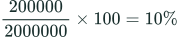 LaTeX:
\frac{200000}{2000000}\times100=10\%Step 2. Find brand-sales share
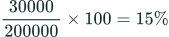 LaTeX:
\frac{30000}{200000}\times100=15\%Step 3. Find category-sales share
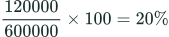 LaTeX:
\frac{120000}{600000}\times100=20\%Step 4. Compute BDI
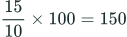 LaTeX:
\frac{15}{10}\times100=150Step 5. Compute CDI
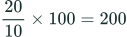 LaTeX:
\frac{20}{10}\times100=200Final answer: BDI = 150; CDI = 200.